
CONFIDENT CONCEPTUAL PLANNING
A more structured, defensible planning approach as water and wastewater requirements evolve.
Trusted by water utilities in more than 120 countries

Conditions change faster than a fixed plan can keep up with. Catchment data updates, standards shift, budgets move, and a design that was right six months ago may not be the one your team wants to defend today.
A structured way to manage that means planning isn't locked in early and left to go stale. Teams can revisit options as conditions change, compare alternatives without starting over, and adjust course while there's still time to act on it.
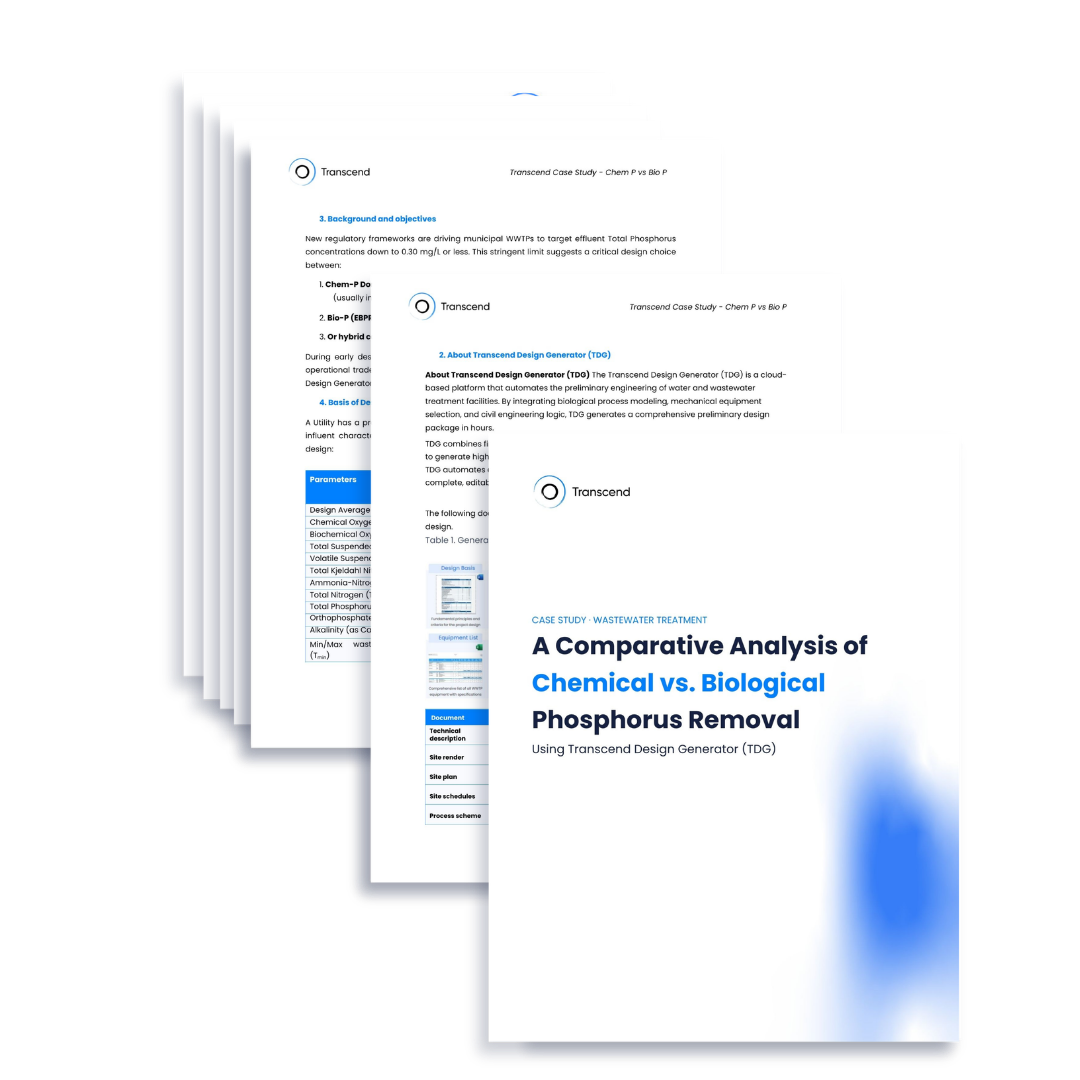
A side-by-side CAPEX and OPEX comparison of Chem-P vs. Bio-P for a 56,000 m³/day municipal WWTP
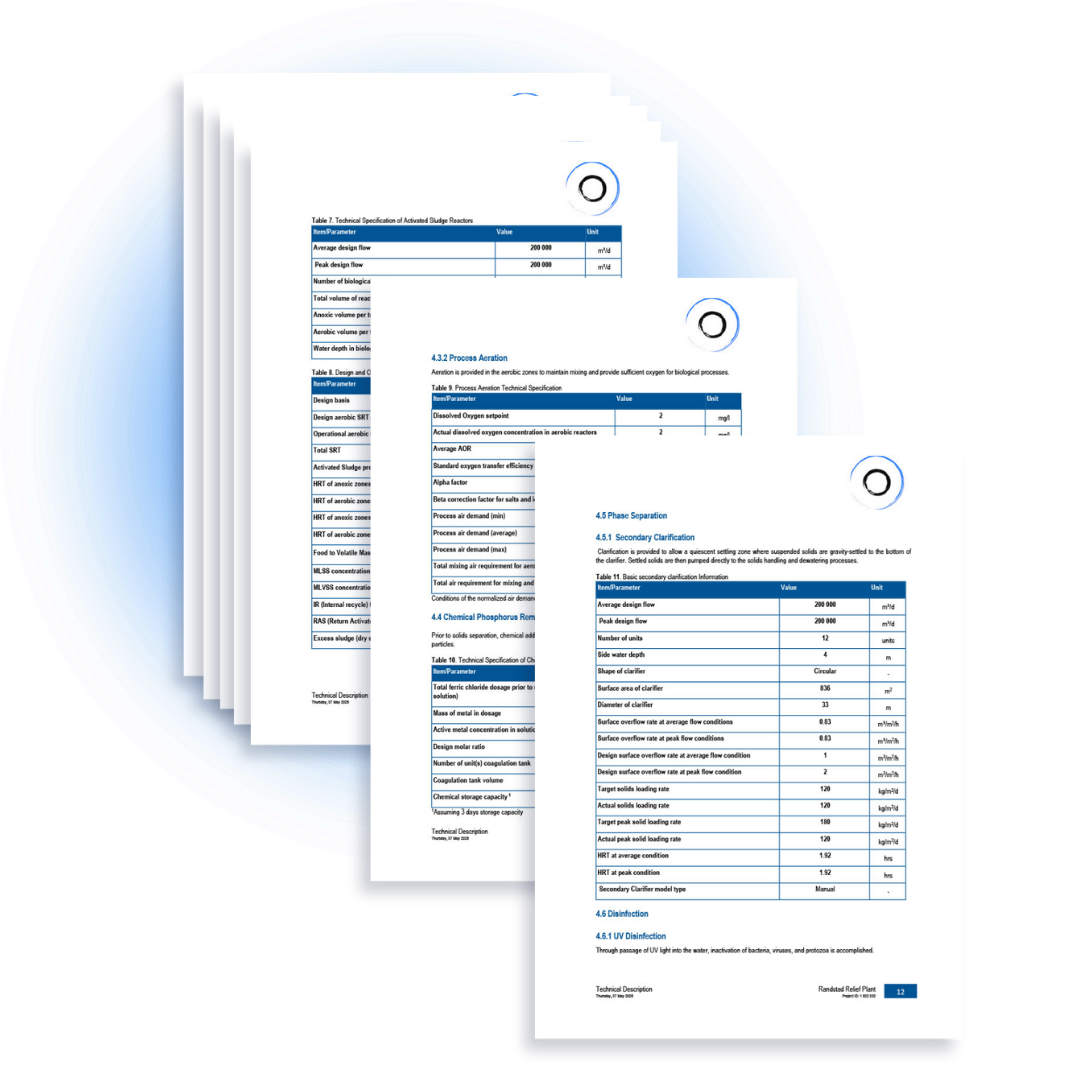
Full process schemes, 3D site renders, and equipment lists generated by TDG for both scenarios
A decision framework covering process conditions, site constraints, economic factors, and long-term risk — built to support internal sign-off
An understanding of where each strategy wins, and where the hybrid approach is the most resilient path
A structured record, built for how New Zealand utilities actually work
Every capital planning cycle asks your team to evaluate more scenarios than your engineering hours can cover. Transcend Design Generator lets you explore more viable designs in a fraction of the time, all governed by your unique specifications and local regulatory requirements.
Work that typically requires weeks of engineering time, or back and forth with consultants, now can happen with less resource in a fraction of the time. With TDG you can explore viable, data-backed solutions and see tradeoffs at the earliest stages of planning.
A standardized output package complete with CAPEX and OPEX planning impact per design
A conceptual design output shaped around New Zealand design standards and terminology
Engineering-grade outputs aligned to regulatory performance standards
How TDG supports long-term infrastructure planning and investment decisions
How resilience and environmental performance objectives are reflected in the design logic
Innovation is the key to anticipating the targets set by the Legal Framework for Sanitation. With new technologies like this one (TDG), we gain agility in planning — a crucial factor for achieving universal access to services by 2029.
- Roberval Tavares de Souza, Executive Director of Engineering and Innovation
SABESP